Sita in Valmiki’s Ramayana: Courage, Choice and the Heart of the Epic
Sita beyond the abduction: her birth from the earth, Shiva's bow, choosing exile, the Ashoka grove, Agni Pariksha, Uttara Kanda debates and Sita Navami.
Verified by multiple reports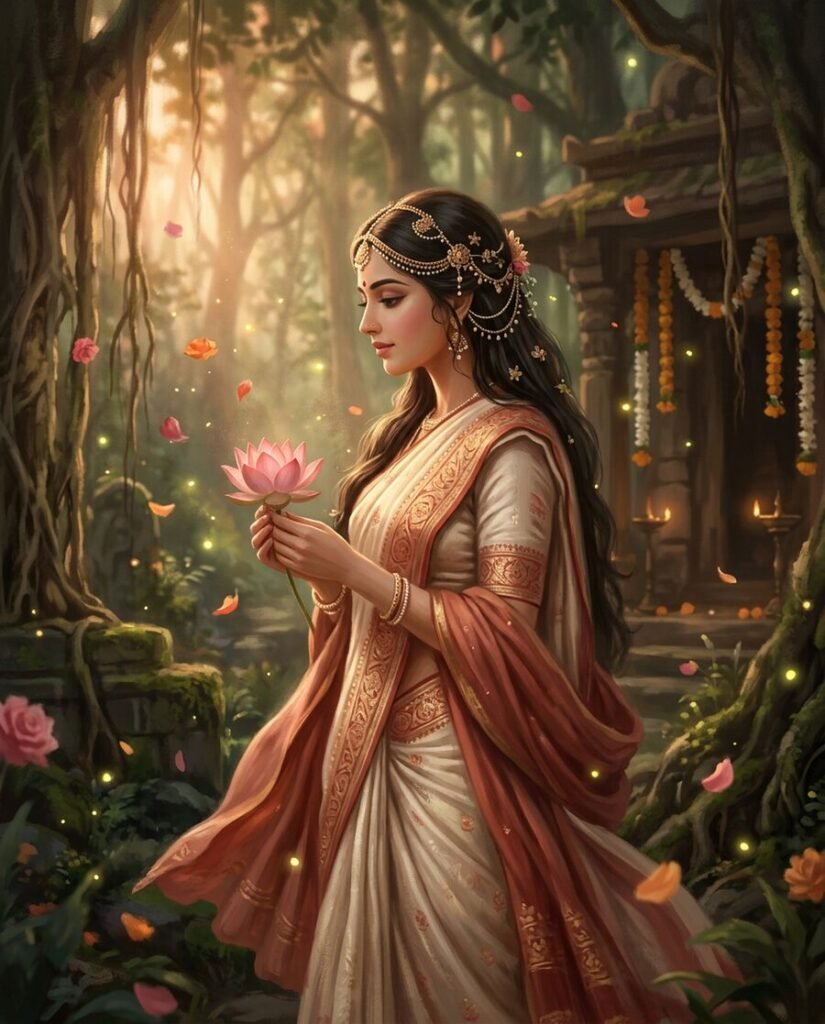
Announcement date: 2 November 2026
Sita is often remembered for one event: her abduction by Ravana. Yet in Valmiki’s Sanskrit Ramayana she argues, decides, refuses, endures and, at the end, makes the most dramatic choice in the epic. Revered as an incarnation of the goddess Lakshmi and as Janaki, daughter of Janaka, she is among the most discussed characters in Indian literature. With Sai Pallavi cast as Sita in Nitesh Tiwari’s two-part Ramayana, this guide looks at who she is in the oldest full telling, and where later versions differ.
This is an explainer about the epic, not the film: the makers have not officially detailed how scenes will be adapted. For the film’s outline, see our story and overview page.
Born of the earth: the daughter of Janaka
King Janaka of Videha, ruling from Mithila, was ploughing a field to prepare it for a sacrifice when a baby girl rose from the furrow; Sita means “furrow”. Janaka raised her as his daughter, and the text calls her ayonija, “not born of a womb”. Scholars link the name to an older Vedic Sita, an earth goddess of fertile fields. The image gives the epic a quiet circle: Sita comes from the earth and, in Valmiki’s final book, returns to it.
Some later texts add an earlier birth as Vedavati, a woman wronged by Ravana who vowed to return as the cause of his downfall; this is not part of Valmiki’s main narrative.
Shiva's bow: how Sita was won
Most people picture a grand swayamvara with Sita holding a garland. Valmiki’s Bala Kanda tells it differently. Janaka explains that he declared his daughter virya-shulka, a bride whose only “price” is valour. Visiting kings could not even lift the great bow of Shiva kept in his family. When the sage Vishvamitra brings the young Rama and Lakshmana to Mithila, Rama lifts the bow, strings it and draws it until it snaps with a thunderous crash. Janaka then sends word to King Dasharatha, and the families arrange the wedding.
In that account Sita is not present at the bow and no garland is thrown, though in the Ayodhya Kanda Sita herself calls the event a swayamvara when telling her story to the sage-woman Anasuya. The garland, and Rama and Sita meeting in Janaka’s garden before the contest, are much-loved features of Tulsidas’s Ramcharitmanas, while Kamban’s Tamil Kamba Ramayanam famously has the two glimpse each other before the bow is broken.
Choosing exile
When Queen Kaikeyi’s boons send Rama into fourteen years of forest exile, he asks Sita to stay safely in Ayodhya. She refuses. In the Ayodhya Kanda she argues that a wife shares her husband’s fortunes and that the forest with him is better than a palace without him. When he still hesitates, she rebukes him sharply, asking whether her father had chosen a son-in-law who was a man only in appearance. Rama relents. Her exile is her own decision: she is not taken along; she insists on going.
The golden deer and the abduction
At Panchavati, the demon Maricha takes the form of a dazzling golden deer at Ravana’s request, and Sita asks Rama to catch it. Lakshmana suspects a trick, but Rama goes. When the dying Maricha cries out in Rama’s voice, Sita, terrified for her husband, accuses Lakshmana bitterly until he leaves her to go and help.
Ravana arrives disguised as a wandering ascetic. Sita offers him hospitality, as custom demands, before he reveals himself and carries her off. The vulture Jatayu fights to save her and is mortally wounded. Over the hills, Sita drops her ornaments, wrapped in her upper cloth, near a group of monkeys, a clue that later helps Rama and Sugriva. The popular “Lakshmana Rekha” does not appear in Valmiki’s text; it comes from later retellings.
Some later versions, notably the Adhyatma Ramayana and the Ramcharitmanas, add that the real Sita was placed in the keeping of Agni, the fire god, and Ravana carried off an illusory Maya Sita. Valmiki does not tell it this way.
Resolve in the Ashoka grove
In Lanka, Sita is held in the Ashoka grove. Ravana visits with offers of wealth and threats tied to a deadline. In Valmiki’s telling, Sita places a blade of grass between them before she speaks, and tells him his only safe course is to return her to Rama. One guard, Trijata, dreams of Ravana’s ruin and urges the others to treat Sita kindly.
When Hanuman reaches her with Rama’s signet ring and offers to carry her home, Sita declines: she will not escape secretly, and wants Rama himself to win her freedom with honour. She sends back her hair jewel and a private memory as proof.
Agni Pariksha: the trial by fire
After Ravana’s defeat, the reunion is not joyful. In Valmiki’s Yuddha Kanda, Rama speaks harshly to Sita before the army, saying he fought to uphold his honour and doubting whether he can take her back. Sita answers with grief and pointed dignity, then asks Lakshmana to build a fire and enters it. Agni rises with her unharmed and testifies to her purity, and Rama says he never doubted her but needed the world to see it.
Traditional commentators often read this as a divine demonstration of Sita’s purity; many modern readers question Rama’s conduct and focus on Sita’s defiant speech. Versions with a Maya Sita reframe it as Agni returning the real Sita, and a Thai version has Sita walk on fire of her own accord. There is no single “correct” interpretation.
The Uttara Kanda: Valmiki's hermitage, Lava-Kusha and the return to the earth
In the seventh book, the Uttara Kanda, Rama learns that people in Ayodhya are gossiping about Sita’s captivity and decides, as king, that the queen must be above rumour. He has Lakshmana leave the pregnant Sita in the forest. (The familiar washerman detail comes from later sources such as the Padma Purana.) Sita is sheltered in the sage Valmiki’s hermitage, where she gives birth to twins, Lava and Kusha, who learn the Ramayana from Valmiki and later sing it at Rama’s court.
When Rama asks her to affirm her purity once more before the assembly, Sita calls on her mother, the Earth, to receive her if she has been true. The goddess Bhumi rises and takes her back, and Sita leaves the world on her own terms.
Why the Uttara Kanda is debated
- Many scholars regard the Bala Kanda and especially the Uttara Kanda as later additions to the core epic (Books 2 to 6), pointing to differences of style and narrative.
- Others, and many traditional readers, accept the Uttara Kanda as part of Valmiki’s work.
- Tulsidas’s Ramcharitmanas does not narrate Sita’s second exile, ending its story with Rama’s reign. Kamban’s Tamil epic likewise closes with the coronation, and a separate Tamil Uttara Kandam is traditionally attributed to another poet.
Sita in Mithila, Janakpur and the festival calendar
In the Mithila region, spanning northern Bihar and Nepal’s Terai, Sita is above all a daughter of the land. Janakpur in Nepal, identified with Janaka’s capital, is home to the Janaki Mandir, and Punaura Dham near Sitamarhi in Bihar is revered as her birthplace.
- Sita Navami (also called Janaki Jayanti) marks her appearance from the earth and is observed on the ninth day of the bright half of the month of Vaishakha (around April–May).
- Vivaha Panchami celebrates the wedding of Rama and Sita on the fifth day of the bright half of Margashirsha (Agrahayana, around November–December), with special grandeur in Janakpur, Mithila and Ayodhya.
Why Sita is the heart of the epic
“Though often regarded as the embodiment of wifely devotion and self-sacrifice, she is critical of Rama at times, even in the earliest version of the Ramayana.” — Encyclopaedia Britannica
Sita is unwavering in loyalty yet never voiceless. She chooses exile, refuses Ravana, refuses a secret rescue, answers Rama’s doubt and finally chooses to return to the earth.
Her story spans both parts of the film’s narrative. Explore our Sita character page, the Ramayana characters guide and the cast and crew page, which lists Sai Pallavi as Sita, Ranbir Kapoor as Rama and Sunny Deol as Hanuman.
A note on sources: this guide follows Valmiki’s Ramayana as summarised by Encyclopaedia Britannica, Wikipedia and its cited scholarship, and a verse-referenced commentary, and flags where other retellings differ.
Last updated: 2 November 2026
Related articles
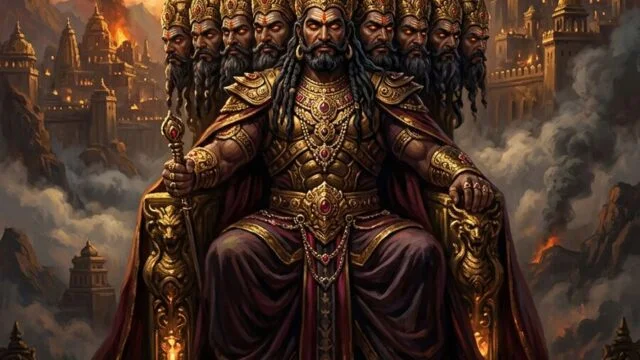
Who was Ravana? The scholar, Shiva devotee and king of Lanka in Valmiki’s Ramayana
Ravana in Valmiki's Ramayana: his birth, Brahma's boon, devotion to Shiva, family, the abduction of Sita, his death, and how…
Read More: Who was Ravana? The scholar, Shiva devotee and king of Lanka in Valmiki’s Ramayana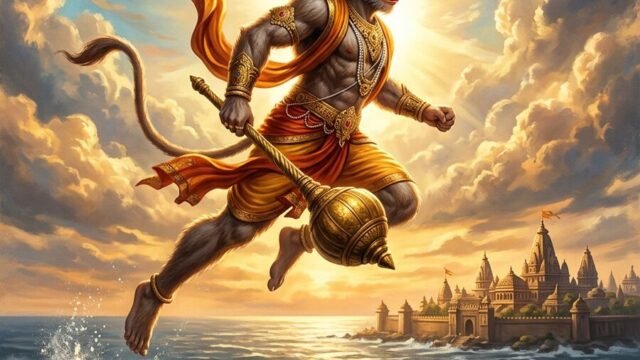
Hanuman in the Ramayana: From Kishkindha to the Leap to Lanka
Hanuman in Valmiki's Ramayana: his birth, the sun episode, meeting Rama, the Sundara Kanda leap to Lanka, the Sanjeevani mountain…
Read More: Hanuman in the Ramayana: From Kishkindha to the Leap to Lanka