Who was Ravana? The scholar, Shiva devotee and king of Lanka in Valmiki’s Ramayana
Ravana in Valmiki's Ramayana: his birth, Brahma's boon, devotion to Shiva, family, the abduction of Sita, his death, and how other traditions see him.
Verified by multiple reports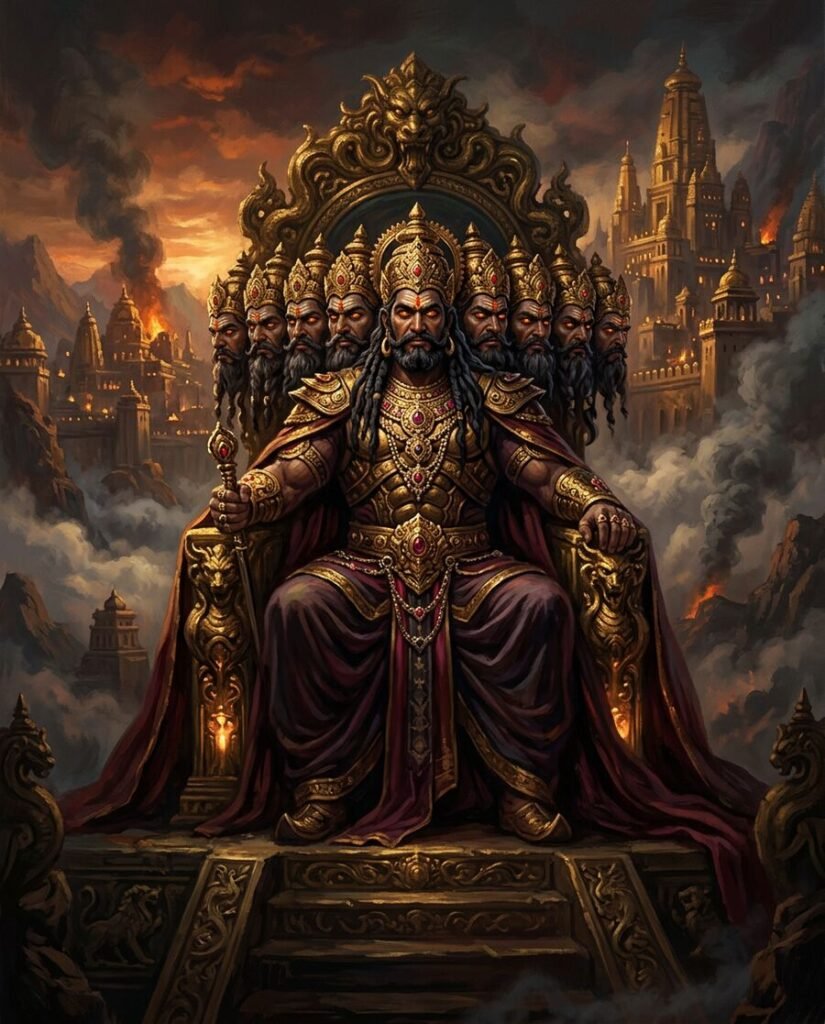
Announcement date: 3 November 2026
Few villains in world literature are as complicated as Ravana. In Valmiki’s Ramayana he is the ten-headed rakshasa king of Lanka who abducts Sita and brings about his own ruin. Yet the same tradition describes him as a learned Brahmin’s son, a master of the Vedas, a capable ruler and one of Shiva’s greatest devotees. With Yash playing Ravana in Nitesh Tiwari’s two-part Ramayana, this guide looks at who Ravana is in the source epic, and at how differently other traditions remember him.
Name and lineage
Ravana belongs to a distinguished family. His paternal grandfather was the sage Pulastya, one of the mind-born sons of Brahma; this is why the epic sometimes calls Ravana Paulastya, and why Britannica notes that one of the Ramayana’s alternative titles is “The Slaying of Paulastya”. His father was the sage Vishrava. His mother, Kaikesi (also spelled Kaikasi), was a daughter of the rakshasa king Sumali, who wanted her to marry the most powerful being she could find so that her children would restore rakshasa power. Through Vishrava, Ravana was also the half-brother of Kubera, the god of wealth, who first ruled Lanka.
The name itself is usually explained as “one who roars” or “one who makes others cry”. The Uttara Kanda gives a story for it, told below. He is also known as Dashanana or Dashagriva (“ten-headed”, “ten-necked”) and as Lankeshwara, lord of Lanka.
The boon from Brahma
Ravana and his brothers Kumbhakarna and Vibhishana performed long and severe austerities to win the favour of Brahma. The boon Ravana chose was protection from death at the hands of gods and other powerful beings: celestials, demons, serpents and the like. Too proud to fear mortals, he left humans off the list. According to the epic, the gods, suffering under his rule, turned to Brahma for help, and Vishnu agreed to be born as a man, Rama, since only a human could kill Ravana.
This is the idea at the core of the film’s official synopsis:
When Rakshasa emperor Ravana, invincible to all but man, conquers the three worlds, Lord Vishnu descends as noble prince Rama. Bound by his father’s vow, Rama enters perilous exile with virtuous Sita and devoted Lakshmana. When Ravana abducts Sita, God in human form rises to fight the greatest war ever.
The phrase “invincible to all but man” captures the irony that runs through the epic: Ravana’s protection was itself the opening through which he would fall.
Scholar, musician and devotee of Shiva
Tradition remembers Ravana as deeply learned, well versed in the four Vedas and the shastras, and a master of the veena. Britannica points to this as the reason he is so morally complex: he is “learned, accomplished, and devoted to the god Shiva”, and still chooses wrongly. Later traditions attribute to him an astrological work called the Ravana Samhita, texts in Ayurveda, and even the invention of the ravanahatha, a bowed folk instrument still played in Rajasthan. These are traditional attributions, not things the epic itself claims.
Ravana and Mount Kailasa
The best-known story of his devotion appears in the Uttara Kanda. Returning from his victory over Kubera in the captured flying chariot Pushpaka, Ravana finds that he cannot fly over a certain mountain, Kailasa, where Shiva and Parvati live. Angry at being stopped by Shiva’s attendant Nandi, he tries to lift the whole mountain. Shiva presses it down with his toe, trapping Ravana beneath it, and Ravana’s great cry of pain gives him his name. He then sings Shiva’s praises until Shiva forgives him and gives him a sword. The scene, known as Ravananugraha (“grace shown to Ravana”), is carved at sites including the Kailasa temple at Ellora and the Elephanta caves.
The famous hymn Shiva Tandava Stotram is traditionally attributed to Ravana, and Tamil Shaiva tradition tells of him making a veena from one of his own heads to sing Shiva’s praises. Readers should know that these attributions come from devotional tradition rather than from Valmiki’s verses, and that some scholars question how much of the Kailasa story belongs to the oldest layer of the epic, since the Uttara Kanda is widely regarded as a later addition.
Lanka and Ravana's family
Ravana took Lanka and the Pushpaka from Kubera and ruled them in splendour. When Hanuman searches the city in the Sundara Kanda, the epic lingers over its wealth and beauty and over Ravana’s palace, home to his many wives. His household and kin play major roles in the story:
- Mandodari – his chief queen, daughter of the architect Maya, remembered as pious and wise, who urges him towards righteousness.
- Vibhishana – his younger brother, who begs him to return Sita, is rejected, joins Rama, and is crowned king of Lanka after the war.
- Kumbhakarna – his giant brother, famous for his long sleep, woken to fight and killed in battle.
- Indrajit (Meghanada) – his most formidable son, named for once defeating Indra, king of the gods; he is killed by Lakshmana.
- Other sons – including Atikaya, also killed by Lakshmana, and Akshayakumara, who falls to Hanuman in Lanka.
- Shurpanakha – his sister, whose humiliation in the Dandaka forest sets off the chain of events that leads to Sita’s abduction.
The abduction of Sita
After Rama destroys Khara and his rakshasa army in the forest, Ravana resolves on revenge. He forces his uncle Maricha to take the form of a golden deer to draw Rama away from the hermitage, then, disguised as a wandering ascetic, approaches Sita and carries her off. The vulture Jatayu tries to stop him and is fatally wounded. In Lanka, Ravana holds Sita in the Ashoka grove, pressing her for months to accept him, and is refused every time.
Later traditions explain why he did not use force. The Uttara Kanda tells of curses laid on him for his earlier violence against women: the ascetic Vedavati, who threw herself into a fire after he seized her and vowed to be reborn to bring about his death, and a curse from Nalakuvara, Kubera’s son, that would destroy Ravana if he ever forced himself on an unwilling woman. Many readers treat these episodes as background that reinforces the epic’s moral judgement of him.
War and death
Ravana ignores the counsel of Vibhishana, Mandodari and his own elders, and the war for Lanka costs him his brothers, his sons and his army. In the end he faces Rama himself in a long duel. Rama finally kills him with a divine weapon associated with Brahma, which, in common tellings, he received from the sage Agastya. What follows is often remembered: Rama asks Vibhishana to perform Ravana’s funeral rites with due honour, a gesture often read as a sign that enmity ends with death. Ravana’s defeat is recalled each year at Dussehra, when giant effigies of him are burned across India.
Ravana in other traditions
Ravana is far from a single figure across the many Ramayanas of South and Southeast Asia:
- Bhagavata Purana. Ravana and Kumbhakarna are rebirths of Jaya and Vijaya, Vishnu’s own doorkeepers, cursed to be born as his enemies so they can return to him sooner.
- Jain Ramayanas. Ravana is a Vidyadhara king with magical powers, and in many versions it is Lakshmana, not Rama, who kills him.
- Thailand. In the Ramakien he is Thotsakan (from Sanskrit Dashakantha, “ten necks”), whose statues guard the Wat Phra Kaew temple in Bangkok.
- Living worship. Some communities in India honour Ravana as a great devotee of Shiva, among them Bisrakh near Greater Noida, which claims to be his birthplace, a Dashanan temple in Kanpur opened once a year at Dussehra, and Gond communities in central India who regard him as an ancestral king.
- Modern retellings. Tamil poet Pulavar Kuzhanthai’s Ravana Kaaviyam (1946) makes him the hero, and novels such as Anand Neelakantan’s Asura (2012) tell the story from his side.
In the Ramayana, Ravana’s greatness is never denied. It is what makes his fall a tragedy and not just a defeat.
Ravana on screen
That double image, brilliant scholar and devotee on one hand and abductor and tyrant on the other, is what makes the role so demanding for an actor. In Nitesh Tiwari’s Ramayana, Yash plays Ravana opposite Ranbir Kapoor’s Rama, with Sai Pallavi as Sita, Sunny Deol as Hanuman and Ravie Dubey as Lakshmana. The makers have not detailed which episodes of Ravana’s life each part will show, so whether the film touches on his boon, his devotion to Shiva or the Kailasa story remains to be seen. For more on the cast and the rest of the story’s figures, see our cast and crew page and character guide.
Last updated: 3 November 2026
Related articles
Hanuman in the Ramayana: From Kishkindha to the Leap to Lanka
Hanuman in Valmiki's Ramayana: his birth, the sun episode, meeting Rama, the Sundara Kanda leap to Lanka, the Sanjeevani mountain…
Read More: Hanuman in the Ramayana: From Kishkindha to the Leap to Lanka
Sita in Valmiki’s Ramayana: Courage, Choice and the Heart of the Epic
Sita beyond the abduction: her birth from the earth, Shiva's bow, choosing exile, the Ashoka grove, Agni Pariksha, Uttara Kanda…
Read More: Sita in Valmiki’s Ramayana: Courage, Choice and the Heart of the Epic