Hanuman in the Ramayana: From Kishkindha to the Leap to Lanka
Hanuman in Valmiki's Ramayana: his birth, the sun episode, meeting Rama, the Sundara Kanda leap to Lanka, the Sanjeevani mountain and his place in devotion.
Verified by multiple reports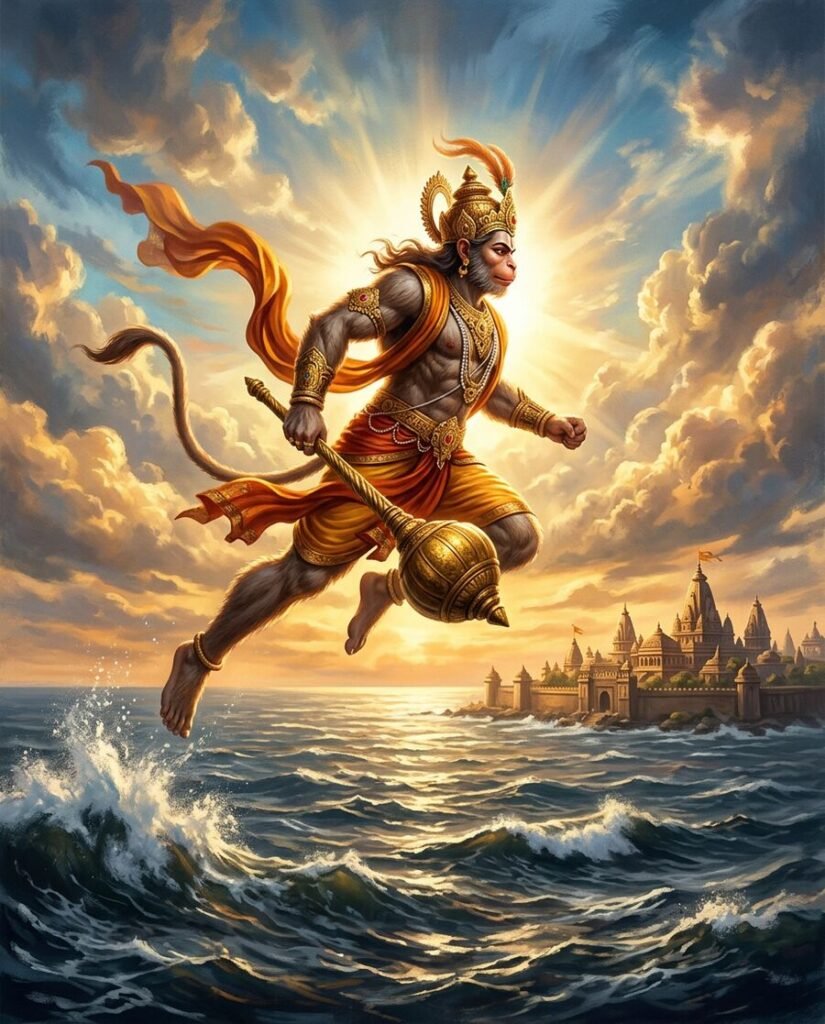
Announcement date: 2 November 2026
Few figures in Indian tradition are loved as widely as Hanuman. In the Ramayana he is a minister of the monkey (vanara) kingdom of Kishkindha who becomes Rama‘s most trusted messenger, and beyond the epic he is worshipped as a deity of strength, devotion and protection. With Nitesh Tiwari’s two-part Ramayana casting Sunny Deol as Hanuman, this guide explains who he is in Valmiki’s Sanskrit epic, the oldest full telling, and notes where later versions differ.
This is an explainer about the epic, not a preview of the film: the makers have not officially detailed how scenes will be adapted. For the film’s outline, see our story and overview page.
Birth: son of Anjana, Kesari and the wind god
Valmiki tells Hanuman’s birth story late, at the end of the Kishkindha Kanda (Book 4), when the search party for Sita is stuck at the southern seashore and the bear Jambavan reminds Hanuman of where he came from.
His mother Anjana was a celestial nymph (apsara) born as a vanara because of a curse, and the wife of the vanara chief Kesari. Vayu, the wind god, blessed her with a son. So Hanuman has a double parentage: Kesari is his father in the social sense, while Vayu is described as his true father, hence names such as Maruti and Pavanputra (son of the wind). The name Anjaneya, popular in South India, honours his mother.
The Shaiva tradition, drawing on texts such as the Shiva Purana, also regards Hanuman as a portion of Shiva, sometimes called the eleventh Rudra. This is a later devotional understanding rather than part of Valmiki’s narrative.
Childhood: the leap at the sun
The best-known story from Hanuman’s childhood is also told in the epic’s flashbacks. As a hungry infant he saw the rising sun, took it for a ripe fruit and leapt into the sky to seize it. Indra, king of the gods, struck him with his thunderbolt (vajra) and the child fell, injured on the jaw (hanu). One traditional explanation of the name Hanuman comes from this: “the one with the (marked) jaw”.
Vayu, grieving, withdrew the air from the world until the gods made amends; they restored the child and granted him boons, including protection from Indra’s weapon, fire and water, and great speed and strength. Because the gifted child’s mischief later disturbed forest sages, he was cursed to forget his powers until reminded of them. That is exactly what Jambavan does at the seashore.
Kishkindha: meeting Rama
Hanuman first enters the main story at the start of the Kishkindha Kanda. Rama and Lakshmana, searching for the abducted Sita, reach Lake Pampa near the Rishyamuka hill. Sugriva, the exiled monkey prince who is hiding from his brother Vali, fears the two armed strangers are Vali’s agents and sends Hanuman to find out who they are.
Hanuman approaches disguised as a mendicant. Valmiki stresses how well he speaks: Rama tells Lakshmana that someone who talks with such clarity and correctness must be learned in the Vedas. Once trust is established, Hanuman resumes his own form, carries the brothers on his shoulders to Sugriva, and helps seal the alliance: Rama will help Sugriva regain his throne, and Sugriva’s armies will search for Sita.
Hanuman goes south with Prince Angada and Jambavan, carrying Rama’s signet ring as a token for Sita. From the vulture Sampati, brother of the fallen Jatayu, they learn that Sita is held in Lanka, across the sea.
The Sundara Kanda: Hanuman's book
The fifth book of the epic, the Sundara Kanda (“the beautiful book”), is the one part of the Ramayana whose central hero is not Rama but Hanuman. Many devotees recite it on its own and consider it the heart of the epic.
The leap across the ocean
Reminded of his strength, Hanuman grows enormous and leaps from Mount Mahendra across the ocean, a distance the text gives as a hundred yojanas. Three encounters test him on the way:
- Mainaka, a mountain rising from the sea, offers him rest; Hanuman touches it courteously and flies on.
- Surasa, mother of the serpents, tests him with gaping jaws. As she grows, he grows, then shrinks to a tiny size, darts in and out of her mouth, and honours her condition with wit rather than force.
- Simhika, a sea demoness who seizes prey by its shadow, catches him; he destroys her and lands in Lanka in a small form to avoid notice.
Searching Lanka and finding Sita in the Ashoka grove
Valmiki describes Lanka through Hanuman’s eyes, from golden mansions to Ravana‘s court. After an anxious search he finds Sita in the Ashoka grove (Ashoka Vatika), thin with grief and guarded by rakshasi women. Hidden in a tree, he watches Ravana threaten and tempt her, and hears her reject him outright.
When she is left alone in despair, Hanuman softly recites Rama’s story so she will not take fright, introduces himself as Rama’s messenger and shows her the signet ring: her first proof in captivity that Rama is alive and searching for her.
Hanuman offers to carry her back at once. Sita refuses: the flight is dangerous, they may be pursued, and above all she wants Rama himself to come, defeat Ravana and free her with honour. She gives Hanuman her hair jewel (chudamani) and a private memory from their exile as a sign only Rama would recognise.
The burning of Lanka
Before leaving, Hanuman tests the enemy’s strength. He wrecks the grove, defeats the guards and kills Ravana’s young son Aksha, then submits to Indrajit’s divine weapon so that he can face Ravana and deliver Rama’s warning. Ravana orders his death, but Vibhishana argues that an envoy must not be killed, so the demons set Hanuman’s tail on fire instead.
Hanuman breaks free and sets Lanka ablaze from rooftop to rooftop. Having made sure Sita is unharmed, he leaps back across the ocean with the good news.
The war and the Sanjeevani mountain
In the Yuddha Kanda (Book 6), Hanuman is among the foremost warriors of Rama’s army. When Indrajit’s attack strikes down Rama, Lakshmana and much of the army, Jambavan tells him of a Himalayan mountain where life-restoring herbs grow, including the one popularly called sanjivani. Unable to identify the right plants, Hanuman lifts the whole peak and carries it to the battlefield. Valmiki has a second, similar episode when Lakshmana is badly wounded; tradition often identifies the mountain as Dronagiri.
In Tulsidas’s Awadhi Ramcharitmanas, the herb mission is tied to Lakshmana’s wound and includes Bharata, guarding Ayodhya, mistaking the flying Hanuman for a demon and bringing him down with an arrow. That scene is not in Valmiki.
After the war
Hanuman returns to Ayodhya for Rama’s coronation, where Sita gives him a pearl necklace. The famous image of Hanuman tearing open his chest to show Rama and Sita in his heart belongs to later devotional elaborations rather than to Valmiki. At the very end of the epic, Rama asks Hanuman to remain on earth for as long as his story is told, which is why Hanuman is counted among the chiranjivis, the long-lived ones, and why many believe he is present wherever the Ramayana is recited.
“As long as my story prevails on earth, best of monkeys, so long shall you live and keep your promise!” — Rama to Hanuman, Valmiki Ramayana, Uttara Kanda (as translated by Arshia Sattar, quoted by Encyclopaedia Britannica)
Hanuman in devotion: the Hanuman Chalisa and Hanuman Jayanti
After Valmiki, bhakti traditions made Hanuman the model devotee, joining heroic courage with humble service. The most widely recited prayer to him is the Hanuman Chalisa, forty verses in Awadhi (a form of Hindi) traditionally attributed to the 16th-century poet-saint Tulsidas. It praises his strength, wisdom and devotion and invokes him as Sankat Mochan, the remover of troubles.
His birth is celebrated as Hanuman Jayanti. In much of North India it falls on the full moon of Chaitra (March–April); some regions observe it on the day before Diwali in Kartika, and several southern states keep their own dates. Devotees fast, visit temples and recite the Chalisa or the Sundara Kanda.
Because the Sundara Kanda sits at the centre of the epic, Hanuman’s journey spans both halves of the story. Read more on our Hanuman character page, our Ramayana characters guide and the cast and crew page, which lists Sunny Deol as Hanuman alongside Ranbir Kapoor as Rama and Sai Pallavi as Sita.
A note on sources: this guide follows Valmiki’s Ramayana as summarised by Encyclopaedia Britannica and standard references, and flags where later traditions differ. Regional retellings vary, and readers may know some episodes in another form.
Last updated: 2 November 2026
Related articles
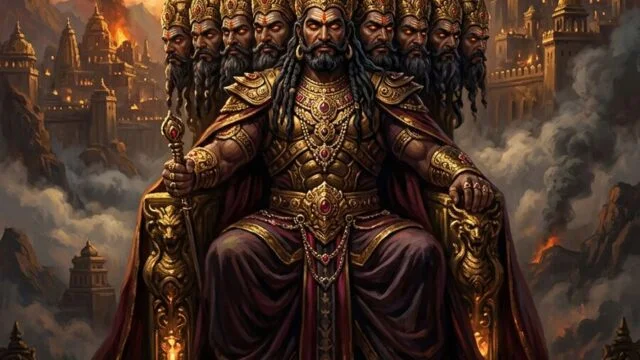
Who was Ravana? The scholar, Shiva devotee and king of Lanka in Valmiki’s Ramayana
Ravana in Valmiki's Ramayana: his birth, Brahma's boon, devotion to Shiva, family, the abduction of Sita, his death, and how…
Read More: Who was Ravana? The scholar, Shiva devotee and king of Lanka in Valmiki’s Ramayana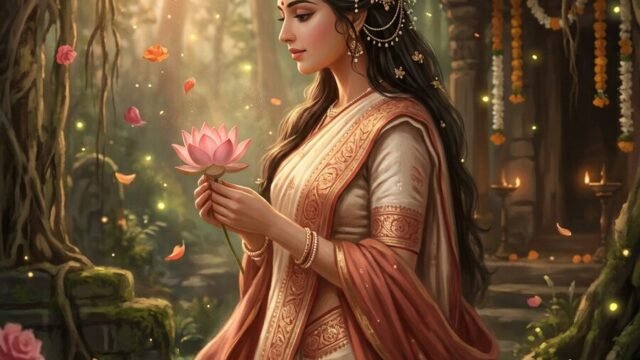
Sita in Valmiki’s Ramayana: Courage, Choice and the Heart of the Epic
Sita beyond the abduction: her birth from the earth, Shiva's bow, choosing exile, the Ashoka grove, Agni Pariksha, Uttara Kanda…
Read More: Sita in Valmiki’s Ramayana: Courage, Choice and the Heart of the Epic